Branding strategy matters because a product built on quicksand is junk

A good branding strategy should never be used to mask weak products. Instead, your branding strategy should form the foundation for something valuable, something that customers will trust in the long run. In this blog, I explain why a product should never be built on quicksand, but rather on a solid foundation of genuine brand values.
These days, I see more and more low-quality products being sold as if they were top-tier. Slick packaging, a sleek logo, a polished website—all designed to cover up the fact that the product isn’t worth much. And the thing that annoys me the most? The fake reviews. You see it everywhere: e-commerce websites highlighting the positive reviews while concealing the negative ones. Sometimes, the reviews are entirely fake. (When I have time, I often search for the reviewers’ names. And what do I find? Nothing. Or worse, I find their photos in stock photo databases through image search.)

Fortunately, there are tools like Fakespot, a handy Chrome extension that analyzes and flags fake reviews. This way, you can uncover the truth behind all those glowing reviews. But it remains a significant problem. Companies dress their products in trendy outfits and hope consumers don’t notice the fake image. What’s missing? A strong branding strategy and real values.
"Great marketing only makes a bad product fail faster." - David Ogilvy What is a branding strategy?
Let’s take a step back and briefly explain what a branding strategy really is. A branding strategy goes beyond just your logo, color scheme, or advertisements. It is the emotional and strategic foundation of everything your brand does.
Branding strategy is all about emotion—the feeling your brand evokes in customers. It answers the question: “Why does your brand exist, and why should anyone care?” The core of a good branding strategy lies in your brand’s “why,” as Simon Sinek explains in his famous book Start with Why. It’s about people not just buying your product, but buying the reason behind why you make it.

A branding strategy also encompasses all the touchpoints where your brand interacts with your audience. This includes not just ads, but also customer service, packaging, store experience, and even how your team interacts internally. These touchpoints must all be consistent and aligned with your brand values, so customers always have the same experience with your brand.
How do you define your brand values?
Brand values form the heart of your brand. They are the norms and beliefs that drive everything, from product development to marketing. But how do you determine what your values are?
This can vary greatly. You can choose to define your values yourself and document them. Make sure these values are realistic and authentic, not just nice-sounding words. Another option is to brainstorm with your team. Or, if you want a guided process, you can follow a workshop with us at Apex Pro. In such a workshop, we work with you to clearly define your brand’s core values and translate them into concrete actions. This process can be as simple or as complex as you want, depending on where you are and where you want to go.
Examples of brand values:
- LEGO – Creativity, Imagination, Fun, Learning, Quality, Care
- H&M – Sustainability, Quality, Fashion Consciousness, Transparency
- Patagonia – Sustainability, Transparency, Action, Innovation
- Unilever – Integrity, Respect, Responsibility, Pioneering Spirit
- Zalando – Inclusivity, Diversity, Innovation, Sustainability
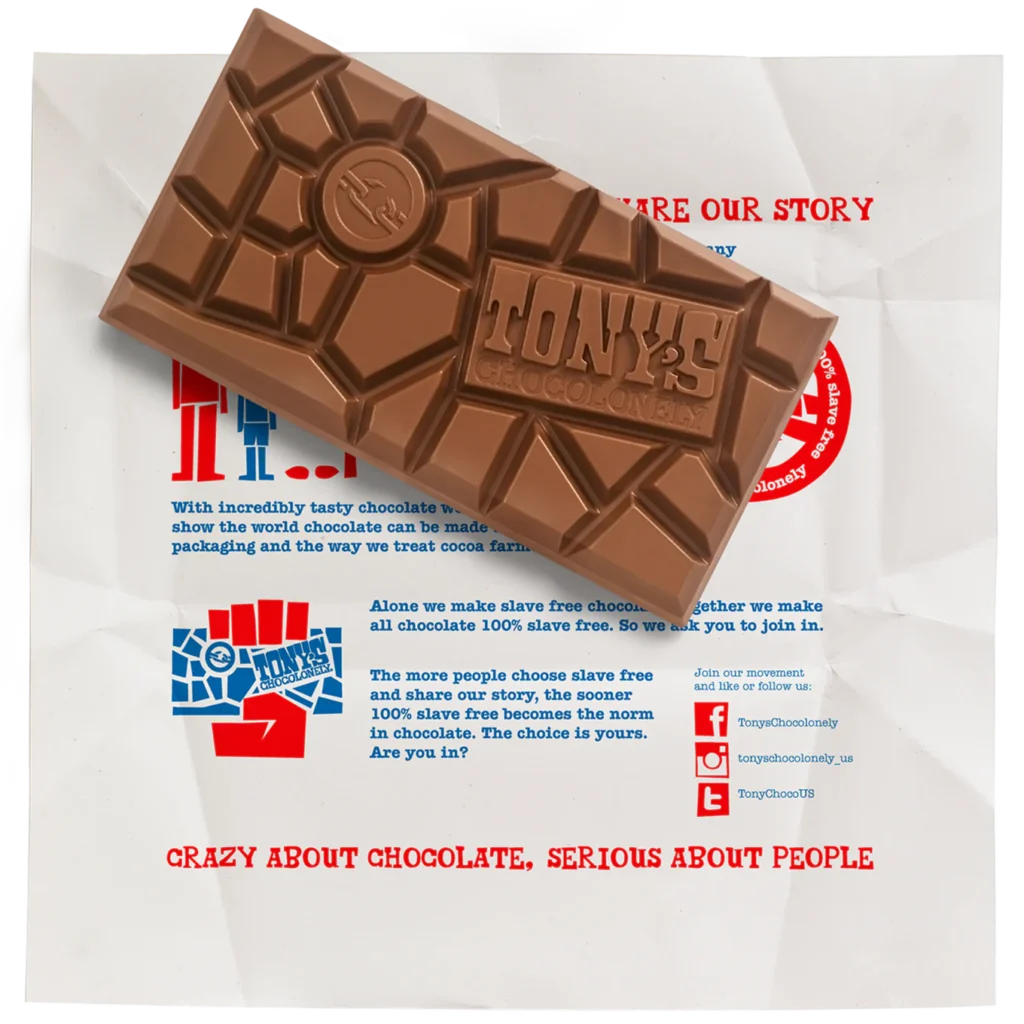
A prime example of brand values in practice is Tony’s Chocolonely. Their brand is built on honesty and sustainability, which is reflected not only in the ingredients they use but also in their communication and campaigns. For example, they are transparent about their supply chain and strive to make 100% slave-free chocolate. These brand values are not just words—they are fully integrated into how the company operates.
How do you translate your values into a brand experience?
Values are just words until you make them visible and tangible in how you present your brand. This means translating those values into every aspect of your branding, from your logo to your campaigns.
Your brand values should be reflected in every element of your branding, not just your products. A good example is the brand IKEA, known for affordable, functional products. These values are consistently carried through in their campaigns, advertisements, and even the shopping experience. Their simple, clear advertisements and catalogs align perfectly with their values of simplicity and functionality.

Brand values as a basis for product development
A strong branding strategy doesn’t stop at marketing. It should have a direct influence on the products you develop. Your products should reflect your brand values, or else your strategy becomes transparent and weak.
Your brand values guide product development. Suppose your brand stands for innovation and sustainability. This means your products need to innovate in terms of sustainability, perhaps by using recycled materials or incorporating new, eco-friendly technologies. Your brand values should also flow into your choices of suppliers and production processes.
Dyson is a brand that consistently integrates its values into product development. They stand for innovation and technical excellence. This is visible not only in their products, like groundbreaking vacuum cleaners and fans, but also in the technology they develop to create these products.
Ensure consistency in your branding strategy
Consistency is key in branding strategy. Your brand must be recognizable and trustworthy across all forms of communication, from campaigns to product packaging.
Nike is an excellent example of consistent brand communication with their slogan “Just Do It.” This slogan is not just a marketing tagline—it’s woven into everything Nike does, from product design to their campaigns. It inspires people to push their limits and excel, aligning perfectly with their brand values of perseverance, performance, and self-improvement.

Nike’s campaigns, featuring athletes like Serena Williams or Cristiano Ronaldo, don’t just show the product—they tell the story of personal growth and achievement. Whether you see an ad, visit their website, or walk into a Nike store, the message is always the same: Just Do It.
One pitfall is to be inspiring on one platform and overly focused on sales on another, causing a fragmented brand experience. Ensure that your brand values are consistently applied across all platforms—from social media posts to physical stores and advertisements.
What happens when your branding strategy doesn’t align with your product?
No marketing campaign can hide a bad product for long. It doesn’t matter how beautifully packaged or slickly marketed your product is—if it doesn’t meet expectations, your brand will eventually fail.
Always focus first on delivering quality that aligns with your brand’s promise. A powerful branding strategy begins with a solid product. Reviews and social media make it easy for consumers to share bad experiences, so ensure that your product minimizes negative feedback. If your brand stands for reliability, then your product must embody that.
Tesla is a good example. Despite production delays, they are known for their innovative electric cars. This consistency between product and promise builds a loyal customer base, even when challenges arise. Tesla’s core values—innovation, sustainability, and customer focus—are clearly reflected in their products and services. Even when mistakes happen, customers are willing to forgive because the brand stays true to its values.

Avoid “facade branding”
Brands that try to hide a bad product behind clever marketing campaigns eventually get caught. Customers quickly discover discrepancies between what a brand promises and what it delivers. A well-known example is Volkswagen during the emissions scandal. They promoted themselves as environmentally friendly, but in reality, their cars were falsifying emissions data. This inconsistency between brand promise and reality severely damaged their brand and eroded customer trust.
True brands are built on true values
Building a product on quicksand, as the title suggests, is a recipe for disaster. You may impress with clever marketing, but without a solid foundation, everything eventually collapses. Brands that achieve long-term success always start with authentic, honest values that are carried through in every aspect of the company.
Make sure that everything you do—from product development to branding and communication—is in line with your brand values. This builds trust and ensures long-term success.
Ready to build a strong brand?
Do you want to build a brand that’s not just beautiful but also stands for something real? Contact me today and find out how I can help grow your brand based on genuine values and a solid strategy.
